Visiones ancestrales: una nueva visión de la historia a través de la mirada de Chelsea Ryoko Wong
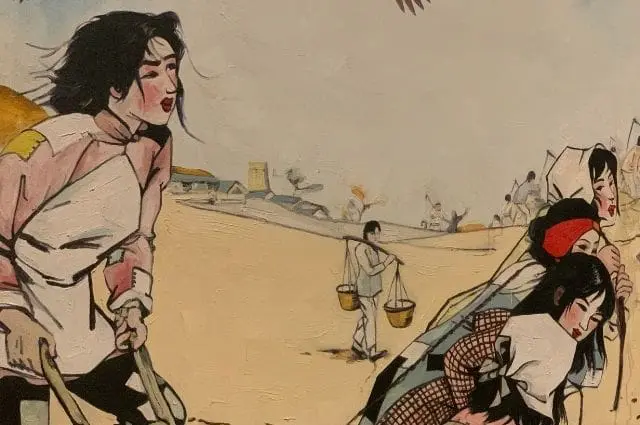
«Visiones ancestrales», una impresionante nueva exposición de Chelsea Ryoko Wong, artista residente del Fondo Harker 2024 en el OMCA, se encuentra perfectamente situada en nuestra Galería de Arte de California, donde descubre narrativas californianas desconocidas y las pone en diálogo con la vida contemporánea. Esta colección de pinturas reimagina el pasado a través de una lente moderna, inspirándose en las vidas de seis mujeres chino-estadounidenses del siglo XX, cuyas historias parciales se conservan en la colección del OMCA. Los vestidos, las fotografías y los objetos efímeros de Rose Setzo, Sophia Chang Wong, Grace Dea, Lei Kim Lim, Sun Fung Lee Wong y Chop Chin Chum sirvieron como fuentes clave para la investigación de Wong, que utilizó para reimaginar el pasado con un guiño fantástico al presente. En particular, los icónicos vestidos qipao o cheongsam que lucían estas mujeres constituyen la base de la exploración de Wong de sus ricas y complejas historias.
«Visiones ancestrales» refleja los sueños, las luchas y los triunfos de estas mujeres, muchas de las cuales emigraron a Estados Unidos o eran hijas de inmigrantes que buscaban una vida mejor. En cada cuadro, Wong combina el respeto por la historia con un toque de fantasía, ofreciendo una conmovedora reflexión sobre la identidad cultural, la transformación y el legado transmitido de generación en generación. Estas obras, inspiradas en la colección de vestidos chinos del OMCA de los años 40 a los 70, dan vida al espíritu de resiliencia que encarnaban estas mujeres. Descubre lo que la artista tiene que decir sobre su obra:
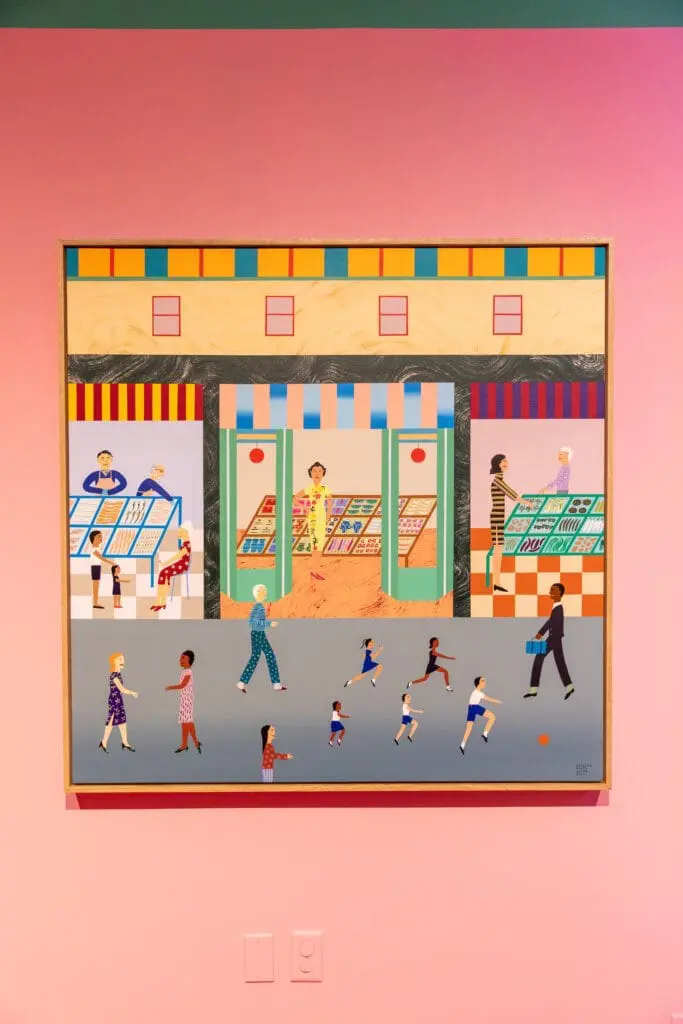
En busca de sueños
Este cuadro se inspira en la vida de Grace Dea, quien donó su colección de vestidos y regentaba una tienda en el número 839 de Grant Avenue, en el barrio chino de San Francisco. La obra representa una animada escena a lo largo de Grant Avenue y se inspira libremente en la arquitectura actual y en imágenes históricas de la fachada de su tienda. En el cuadro, una orgullosa matriarca se yergue en el centro, observando el mundo que la rodea. En los edificios adyacentes hay un puesto de marisco y un mercado de frutas y verduras. Acaban de salir de la escuela y los niños se persiguen por la calle , corriendo tras una pelota y con piruletas del mercado de marisco en la mano. En esta escena multigeneracional, titulada «Chasing Dreams» (Persiguiendo sueños), vemos el barrio chino como una comunidad, no solo como un lugar para el comercio, sino como un escenario para las familias. En aquella época era poco habitual que las mujeres asiáticas obtuvieran títulos superiores, por lo que muchas aceptaban trabajos de baja categoría o, por el contrario, se dedicaban a los negocios. Mostrarla en esta etapa de su vida, como una orgullosa mujer de negocios, la define como un modelo a seguir para sus compañeros y su familia.
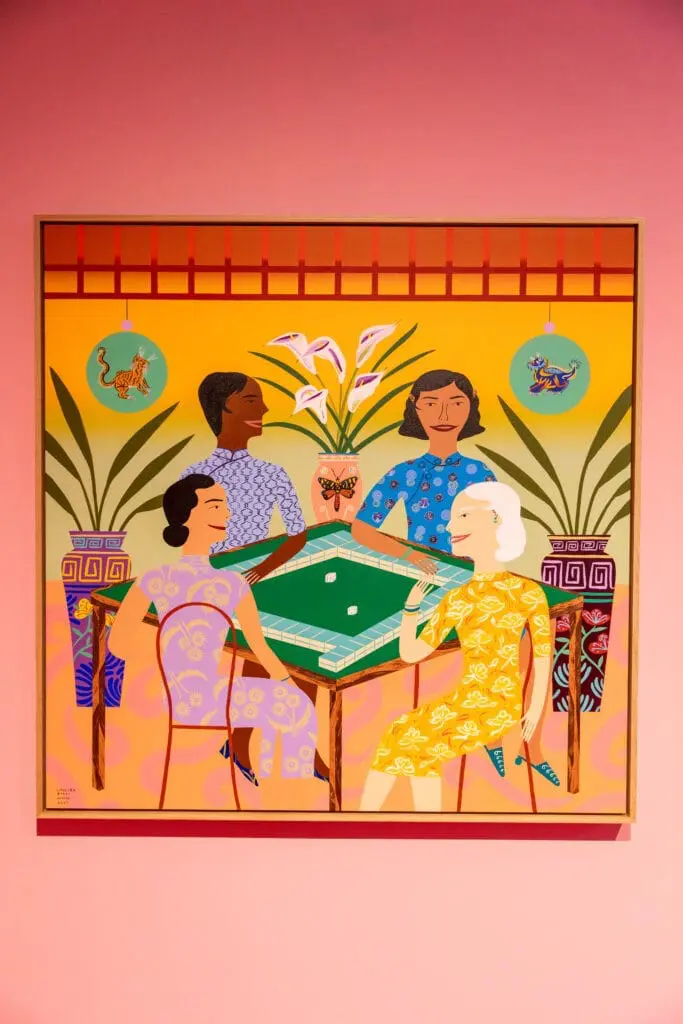
Aquí en la Tierra
Esta pintura representa una escena de mahjong en la que aparecen los cuatro trajes de la colección. La cantidad de joyas y el nivel de elegancia de los trajes indicaban si las familias estaban recibiendo invitados. Los adornos, como el jade, el oro, las perlas y la seda, sugerían un cierto nivel de sofisticación y riqueza. En esta escena, los motivos de los faroles y los jarrones se inspiraron en imágenes de principios del siglo XIX. El título, Here on Earth, hace referencia al juego del mahjong y a su simbolismo subyacente. Se dice que 144 (el número de fichas de un juego completo de mahjong) es el número del plano de la Tierra, y el cuadrado formado por las fichas puede verse como una representación simbólica del universo. El Cielo se manifiesta en las Cuatro Estaciones, la Tierra en las Cuatro regiones (Este, Sur, Oeste y Norte).
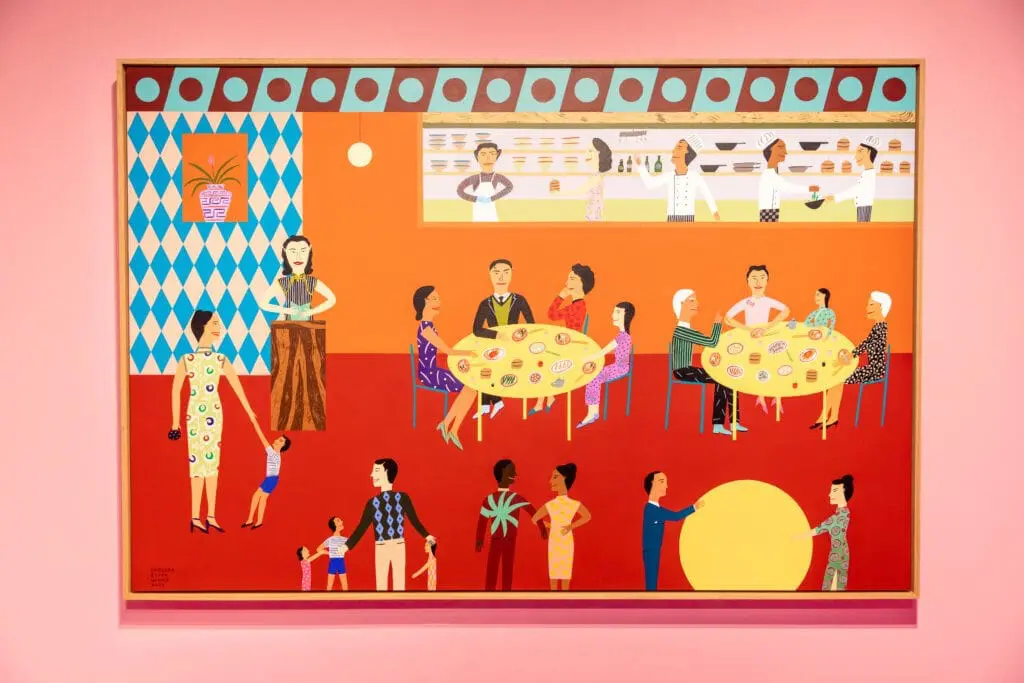
El ciclo de la vida
Este cuadro retrata la vida de Rose Sezto, que nació en Manila en 1921. Rose y sus dos hijos emigraron a Estados Unidos, donde trabajó como lavaplatos en un hotel y como camarera en un restaurante. En Estados Unidos tuvo dos hijos más y en este cuadro la vemos en diferentes etapas de su vida disfrutando del restaurante con su familia, como camarera y como lavaplatos. La imaginería circular se repite en este cuadro y también se insinúa con la representación de Rose en tres ocasiones, a medida que asciende en la escala socioeconómica de la vida.
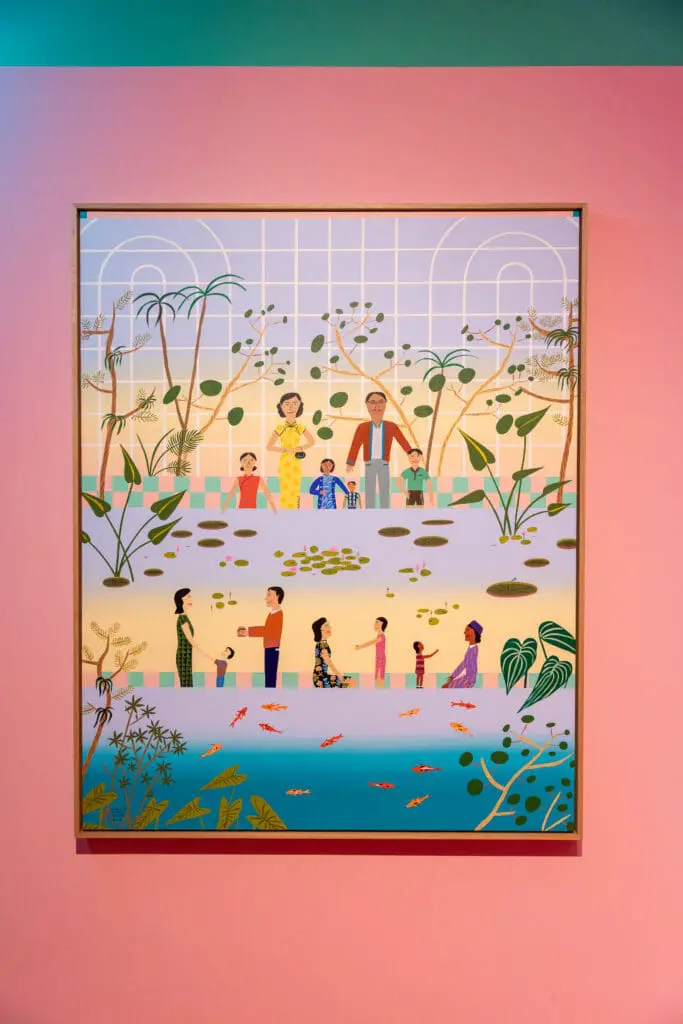
La luz se refracta
Este cuadro está inspirado en Chop Chim Chum, que nació en Cantón (China) en 1908. Su padre había nacido en Hawái, por lo que Chop Chim Chum era ciudadana estadounidense. Alrededor de 1930 emigró a San Francisco y permaneció detenida en Angel Island durante dos semanas. Se casó por conveniencia y tuvo cinco hijos. Chop Chin Chum cursó estudios de primaria y trabajó en una fábrica de ropa cooperativa en Oakland durante 26 años. La despidieron del trabajo apenas diez minutos antes del cierre y llevó una vida dura. En este cuadro, basado en una fotografía de la familia de Chop Chim Chum, los retraté rodeados de sus seres queridos en el Conservatorio de Flores del Golden Gate Park. Ella se enorgullecía de su familia y yo quería representarla en medio del simbolismo de los nuevos comienzos, las plantas, los peces koi y una abundancia de luz. Bending Light hace referencia a la forma en que la luz se refracta en un invernadero, como en el Conservatorio de las Flores: cuando la luz del sol atraviesa el cristal, se curva, beneficiando a las plantas a través de la fotosíntesis al dispersarse de manera más uniforme.
Amor inquebrantable
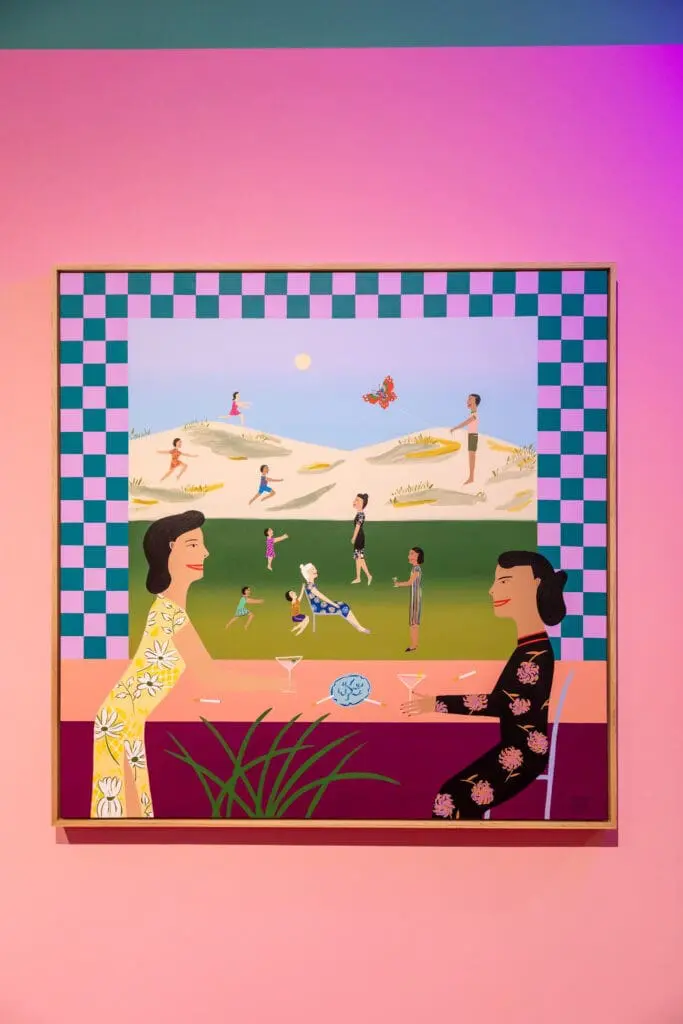
Este cuadro es el colofón de la exposición. En entrevistas con la familia de Grace Dea, hablan del éxito como la posibilidad de salir de Chinatown, mudarse al barrio de Richmond o, mejor aún, al de Sunset. Cuando Rose se jubiló, se mudaron a Sunset. Este cuadro muestra a dos mujeres charlando y fumando cigarrillos en una cocina —algo habitual en aquella época— y a una familia al fondo. El jardín de césped verde linda con las dunas de arena, una imagen inspirada en la Great Highway. Hay una sensación general de relajación y satisfacción. Un padre hace volar una cometa con forma de mariposa, inspirada en las antiguas cometas chinas. La siguiente generación corre por las dunas y persigue a la mariposa, el símbolo definitivo de la transformación. Una abuela se sienta en medio, rodeada de sus seres queridos.
Más en nuestro BLOG


Más fotos de nuestra galería