Reframing Earth Month: Native Sovereignty, Environmental Justice, and the Future of Stewardship
Each April, Earth Month invites reflection on our relationship to the natural world—how we care for it, how we depend on it, and how we imagine a more sustainable future. Since the first Earth Day in 1970, environmental movements have brought critical attention to pollution, conservation, and climate change. Yet these movements have not always centered the voices and knowledge of the first stewards of this land: Indigenous communities.
At the Oakland Museum of California (OMCA), Climate Action Month offers an opportunity to look more closely at this history—and to consider how environmental justice and Native sovereignty are deeply connected.
Environmental justice calls for equitable access to clean air, water, and land, while addressing the disproportionate environmental burdens faced by marginalized communities. For Native peoples, these issues are inseparable from sovereignty—the right to steward ancestral lands, practice cultural traditions, and maintain relationships with ecosystems developed over thousands of years. When Indigenous stewardship is disrupted, so too are the systems that have long sustained ecological balance.
On view through May 31, Good Fire: Tending Native Lands explores this connection through the lens of cultural burning. For millennia, Native communities across California have used fire as a tool of care—supporting biodiversity, renewing plant life, and sustaining cultural practices. These intentional burns, often referred to as “good fire,” reflect deep knowledge of local ecosystems and a responsibility to future generations.
This perspective challenges a dominant Western narrative that frames fire only as destruction. As California continues to experience more frequent severe wildfires, the exclusion of Indigenous fire practices—and the policies that suppressed them—has contributed to the conditions we face today. Re-centering this knowledge is not only an act of cultural recognition and honoring the rights of Indigenous peoples, but also is a vital step toward environmental resilience.
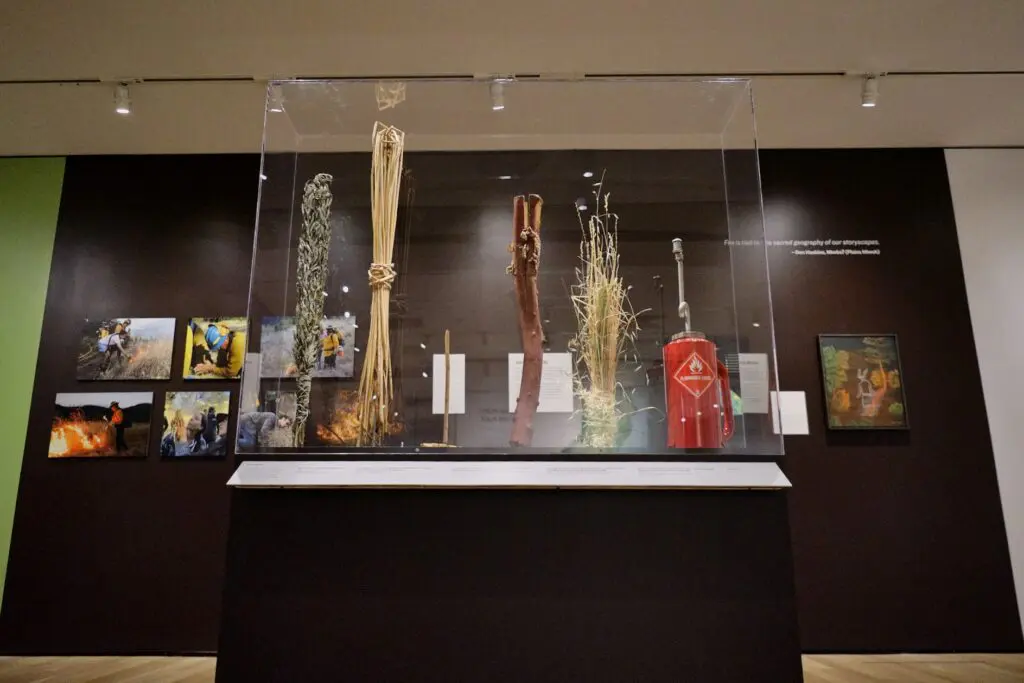
OMCA’s recent Spotlight Sundays program on April 19, Cultural Burn Practices and the Future of Fire, brought these ideas into conversation. Led by Corrina Gould of the Sogorea Te’ Land Trust, alongside Tribal EcoRestoration Alliance leaders, the program explored how cultural burning affirms tribal sovereignty while supporting healthy ecosystems. Through dialogue and shared knowledge, visitors considered what it means to be in right relationship with the land—and how Indigenous leadership is shaping more sustainable futures.
Beyond the gallery walls, OMCA’s campus offers another way to experience these ideas in practice. The Museum’s terraced garden, overlooking Lake Merritt, has been thoughtfully landscaped with native and drought-tolerant plantings representing California’s diverse ecoregions. From coastal forests to oak woodlands and delta landscapes, the OMCA garden reflects the richness and specificity of place.
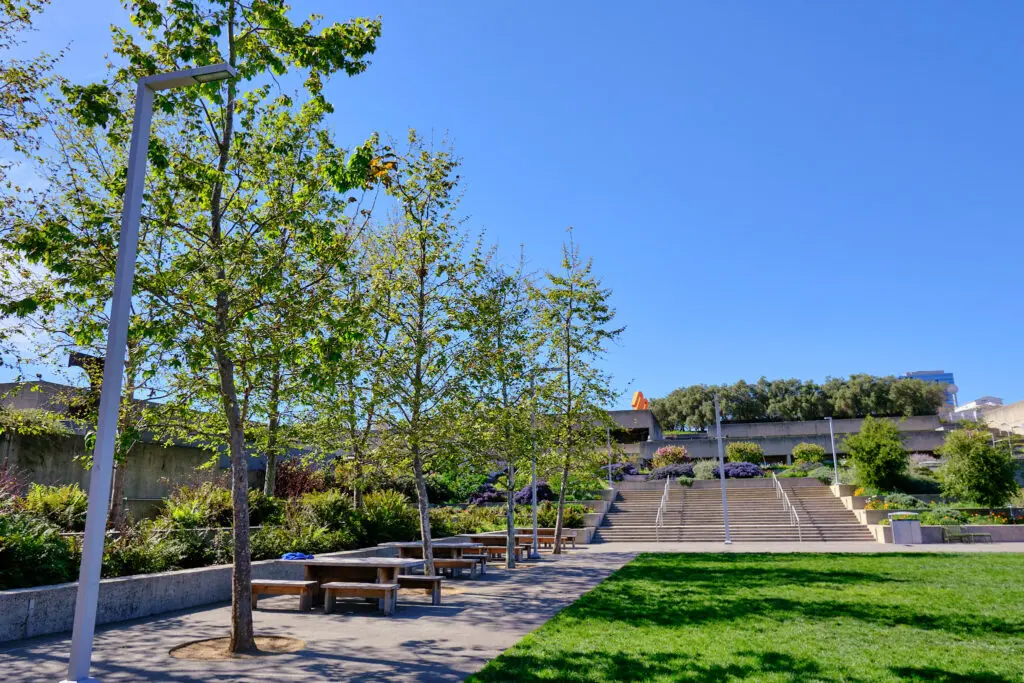
Native plants play a critical role in environmental health. Adapted over time to local soil, climate, and wildlife, they require less water, support pollinators, and provide habitat for birds and insects. Just as importantly, they are deeply connected to Indigenous knowledge systems—used for food, medicine, and cultural practices. When native plant populations disappear, so too do the relationships and histories they carry.
Learning to recognize and support these plants is one small but meaningful way to participate in environmental stewardship. It is also a reminder that sustainability is not only about innovation, but about listening—honoring the knowledge that has long existed and continues to guide care for the land.
As Earth Month encourages action, it also invites reflection: whose knowledge has shaped our understanding of the environment, and whose voices are still missing? At OMCA, programs and exhibitions like Good Fire offer space to engage these questions, bringing forward Indigenous perspectives that are essential to the future of environmental justice.
We invite you to join us this April—to explore the galleries, attend a program, and spend time in the gardens. As Good Fire: Tending Native Lands approaches its final weeks, it offers a timely opportunity to reconsider our relationship with fire, land, and one another.
Together, these experiences ask us to imagine a future rooted not only in sustainability, but in reciprocity, responsibility, and respect.